
Why B2B marketing needs a photography-specific approach
Marketing B2B is the process of attracting, educating, and converting business buyers through messages, channels, and proof points designed for longer decision cycles. For photography businesses, this can mean winning corporate headshot contracts, product photography retainers, architectural shoots, event coverage, brand campaigns, or ongoing content production for companies. Unlike consumer photography, B2B photography buyers often need to justify the investment internally, compare portfolios, confirm usage rights, review timelines, and involve multiple stakeholders before booking.
This photography-focused version builds on the core strategy discussed in Zigma’s original guide to marketing B2B, but reframes it for studios, commercial photographers, and visual content teams that sell to businesses rather than individual consumers.
For a photography studio, the challenge is rarely just being visible. The real challenge is being visible to the right companies, at the right buying moment, with the right visual proof. A portfolio may attract attention, but a business buyer also wants to understand process, pricing structure, licensing, turnaround time, location availability, and whether your team can handle the scale of the assignment. Strong Digital Marketing Services help connect that visibility to qualified enquiries instead of general traffic.
How marketing B2B works for photographers
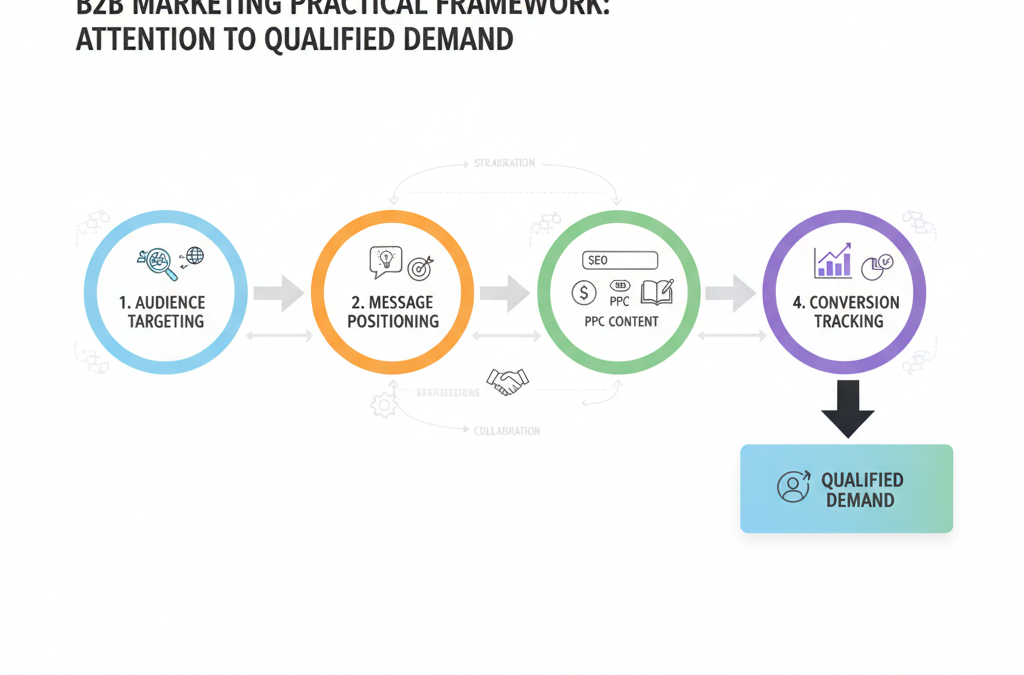
In practice, B2B marketing for photography connects four important areas: audience targeting, service positioning, demand capture, and conversion tracking. Audience targeting defines whether you want to reach marketing managers, agency producers, real estate developers, HR teams, hospitality brands, manufacturers, or local business owners. Service positioning explains why your photography is the right fit for that buyer’s goals. Demand capture brings potential clients in through search, paid ads, content, referrals, email, and local visibility. Conversion tracking shows which channels are producing serious business enquiries.
This is where many photography businesses confuse activity with progress. Posting on social media, updating a portfolio, or running ads can help, but none of those actions are a complete strategy on their own. Sustainable B2B growth usually happens when SEO Services, landing pages, paid acquisition, portfolio structure, and analytics work together. The goal is to help a business buyer quickly understand what you shoot, who you serve, how you work, and why they should contact you.
A common mistake is assuming that the images alone will do all the selling. Strong photography matters, of course, but B2B buyers often need more context. They may want to know whether you can photograph multiple executives in one day, manage product batches, coordinate with an agency, deliver files to brand specifications, or license images for specific campaigns. If your website does not answer those questions, qualified buyers may leave even if they like your work.
The B2B marketing channels that matter for photography businesses
Most commercial photography clients do not follow a simple path from discovery to booking. A marketing director might first find your studio through organic search, return later through a branded search, compare your portfolio with other photographers, share your site with a colleague, and finally submit an enquiry after reviewing your service page. That means your marketing should support both discovery and decision-making.
Search engine optimization is especially useful when buyers are already looking for services such as product photography, corporate headshots, event photography, industrial photography, architectural photography, or commercial photography in a specific city. Pay per click advertising can help test high-intent searches faster. Content marketing can support longer buying cycles by explaining preparation, shoot planning, licensing, retouching, and image delivery. Local search marketing and google business profile optimization may also matter for studios serving business clients in defined regions.
The first question is not “Which channel is best?” A better question is: are you trying to create awareness, capture existing demand, or improve conversion from the demand you already have? A studio with strong referrals but weak website conversion needs a different plan than a photographer who has a strong portfolio but little search visibility.
A practical framework for stronger B2B photography marketing
Step 1: Define the business buyer clearly
Photography businesses often serve very different buyer types. A corporate headshot buyer may care about scheduling, consistency, and speed. A product photography buyer may focus on colour accuracy, file naming, and repeatable production. An agency producer may need creative flexibility, usage terms, and reliability on set. Each buyer has different concerns, so your marketing should not speak to all of them in the same way.
What to document: Buyer role, industry, common project types, urgency triggers, budget expectations, and decision criteria.
Real consequence: Clearer service pages, stronger enquiries, and fewer conversations with prospects who are not a fit.
Example: A studio targeting corporate headshots should use different messaging than a photographer targeting manufacturers that need technical product images.
Step 2: Match portfolio pages to search intent
Not every visitor is looking for the same proof. Someone searching for “commercial photographer” may want a broad overview, while someone searching for “product photography for ecommerce” likely wants examples, process details, turnaround expectations, and file delivery information. Your pages should match the intent behind the search.
What to build: Dedicated service pages, focused portfolio galleries, location-specific pages where relevant, and educational articles that answer planning questions.
Real consequence: Visitors land on pages that feel relevant to their project, which can reduce friction before they enquire.
Example: A search for corporate headshot photography should not land on a general gallery with no information about group scheduling, background options, or delivery timelines.
Step 3: Build tracking before increasing ad spend
A photography business can receive website visits, social clicks, and form fills without knowing which sources produce serious commercial opportunities. Before scaling paid media or SEO investment, tracking should show where enquiries come from and which ones turn into real sales conversations.
What to track: Contact form submissions, phone calls, quote requests, booked consultations, source data, and qualified project types.
Real consequence: Better budget decisions and less reliance on surface-level metrics such as impressions or likes.
Example: A studio may discover that a lower-volume search campaign produces better corporate leads than a broader campaign that attracts casual shoppers.
Step 4: Improve the enquiry path, not just the visuals
Beautiful images can attract attention, but the enquiry path still needs to be clear. If the page is slow, the call-to-action is vague, or the form asks for too much too soon, business buyers may postpone contacting you. B2B photography pages should make the next step feel simple and low-friction.
What to improve: Headlines, service explanations, portfolio organization, FAQs, trust signals, form fields, page speed, and mobile usability.
Real consequence: More qualified enquiries from the traffic you already have.
Example: A product photography page can convert better when it explains shoot preparation, image quantity, retouching options, and how to request an estimate.
Step 5: Review marketing performance as a system
B2B buyers rarely book after one interaction. Organic search may introduce your studio, paid search may bring them back, a portfolio page may build confidence, and a follow-up email may help close the project. Looking at each channel in isolation can hide what is actually supporting revenue.
What to review monthly: Organic traffic quality, paid campaign enquiries, conversion rates by page, sales feedback, source quality, and repeat business potential.
Real consequence: A clearer understanding of which marketing activities support serious commercial work.
Example: A commercial photography studio may find that educational content helps prospects understand the process, even if the final enquiry comes through a branded search.
What a strong B2B photography website should communicate
A photography website for business clients needs to do more than display attractive images. It should help a buyer quickly decide whether your studio is suited to their project. That means presenting your services, process, proof, and enquiry path in a way that supports decision-making.
Useful elements include clear service categories, industry-specific portfolio examples, concise project descriptions, location information, licensing guidance, production capabilities, and answers to common planning questions. A business buyer may not need every technical detail immediately, but they do need enough clarity to feel confident starting a conversation.
- Service clarity: Separate commercial photography, corporate headshots, product photography, events, architectural work, and other core services where relevant.
- Portfolio relevance: Show examples that match the type of client you want to attract.
- Process explanation: Explain how enquiries, estimates, planning, shoot days, editing, and delivery typically work.
- Trust signals: Include recognizable client categories, testimonials where available, and practical proof of reliability.
- Conversion path: Make it easy to request a quote, book a call, or send project details.
How to choose marketing support for a photography business
Choosing marketing support for a photography business is not just about hiring someone who can run ads or write captions. B2B photography marketing needs a team that understands search intent, portfolio structure, landing page strategy, analytics, and how business buyers evaluate creative services.
A capable digital marketing agency should be able to explain how it will attract the right clients, measure enquiry quality, improve service pages, and connect campaigns to business outcomes. If reporting focuses only on clicks, impressions, or social engagement without explaining lead quality, that is a warning sign.
Useful evaluation points include:
- Channel fit: Ask whether SEO, PPC, content, local search, or remarketing makes the most sense for your photography services.
- Measurement setup: Confirm how form fills, calls, booked consultations, and qualified enquiries will be tracked.
- Website support: Ask whether they can help improve landing pages, portfolio navigation, and conversion paths.
- Business understanding: Look for a team that understands the difference between consumer photo sessions and B2B photography sales cycles.
SEO vs PPC for B2B photography marketing
SEO and PPC should not be treated as opposites. For many photography businesses, they work best together. SEO helps build long-term visibility for services and locations. PPC can generate faster feedback, test messaging, and capture high-intent searches while organic visibility is still developing.
SEO is useful when you want to build durable visibility around search terms related to your specialties, such as corporate photography, product photography, commercial photographer, or event photography for businesses. PPC is useful when you need quicker visibility for competitive terms or want to test which service offers attract the strongest enquiries.
- Use SEO when: You want long-term discovery, stronger non-paid traffic, and educational content that supports research-stage buyers.
- Use PPC when: You need faster traffic, controlled testing, and visibility for high-intent searches.
- Use both when: You want immediate demand capture and long-term authority building to work together.
What impacts ROI for commercial photography marketing
ROI in B2B photography marketing depends on more than traffic volume. It is shaped by the quality of the audience, the clarity of the offer, the strength of the portfolio, the enquiry process, follow-up speed, pricing fit, and how well the service page matches buyer intent.
A photography business can attract plenty of visitors and still struggle to book qualified work if the website does not clearly explain services or if enquiries are not tracked properly. In many cases, improving the handoff from visitor to enquiry can be as important as increasing visibility.
- Search intent quality: Commercially focused searches are often more valuable than broad photography traffic.
- Portfolio specificity: Buyers want to see examples close to the work they need.
- Offer clarity: Pages should explain what is included, how the process works, and how to request a quote.
- Tracking quality: Analytics should show which sources produce qualified business enquiries.
- Follow-up process: Fast, helpful responses can influence whether an enquiry becomes a booked project.
How local photography businesses can compete for B2B clients
Local visibility matters for many photography studios, especially those serving corporate, real estate, hospitality, event, or small business clients in a specific city or region. Business buyers often prefer a photographer who understands the local market, can travel to nearby locations, and is available for repeat work.
Competing locally does not always mean trying to rank for every photography keyword. It often means building focused service pages, optimizing your Google Business Profile, earning relevant reviews, and creating content that reflects the actual services local companies search for.
- Own a service niche: It may be easier to grow around corporate headshots, product photography, or architectural work than broad photography positioning.
- Use location intent wisely: Build pages that reflect how business buyers search in your area.
- Make proof easy to find: Organize galleries by service type or industry instead of forcing visitors to interpret everything themselves.
- Support repeat work: Explain how your studio handles recurring shoots, team updates, product batches, or ongoing content needs.
What experienced photography marketers notice earlier
- Lead quality problems often begin before the enquiry. Broad keywords, unclear service pages, and generic messaging can attract people who are not looking for commercial photography.
- A portfolio without context can slow decisions. Business buyers need to understand what the project involved, what kind of client it served, and whether you can handle similar work.
- Tracking gaps can distort strategy. If calls, forms, and booked consultations are not measured correctly, it is difficult to know which channels deserve more investment.
- SEO and paid search can inform each other. Search query data can reveal the language buyers use, while SEO content can answer questions that paid landing pages cannot cover in full.
Key takeaways for marketing B2B photography services
Strong marketing B2B for photography businesses is about more than visibility. It is about helping the right business buyers understand your services, trust your process, and take the next step. Clear positioning, search-intent matching, organized portfolios, reliable tracking, and conversion-focused pages can turn visual attention into qualified demand.
For commercial photographers, studios, and creative teams, the practical goal is to build a marketing system that supports real business enquiries rather than casual browsing. If you need help connecting SEO, PPC, landing pages, analytics, and conversion strategy, 📩 Ask an SEO/PPC question.
FAQs About Marketing B2B for Photography Businesses
How is B2B photography marketing different from marketing to consumers?
B2B photography marketing usually involves longer decision cycles, multiple stakeholders, higher project requirements, and more emphasis on reliability, process, licensing, and business outcomes. Consumer photography often depends more on personal preference and emotional appeal.
Which channel should a commercial photographer start with?
It depends on the starting point. If the website already converts well but lacks traffic, SEO or PPC may help. If the site attracts visitors but few qualified enquiries, improving service pages, portfolio structure, and conversion tracking may be the better first step.
Does SEO work for photography businesses?
SEO can work well when pages are built around clear services, locations, and buyer intent. A commercial photographer may benefit from dedicated pages for corporate headshots, product photography, event coverage, architectural photography, or other specialized services.
What should a B2B photography landing page include?
A strong landing page should include a specific headline, relevant portfolio examples, a clear explanation of the service, process details, trust signals, common questions, and an easy way to request a quote or consultation.
How can a photographer tell whether leads are qualified?
Qualified leads usually match your target service, budget range, timeline, location, and project type. Tracking source data, form details, sales feedback, and booked projects helps determine which marketing channels produce the best opportunities.
Recent Comments