
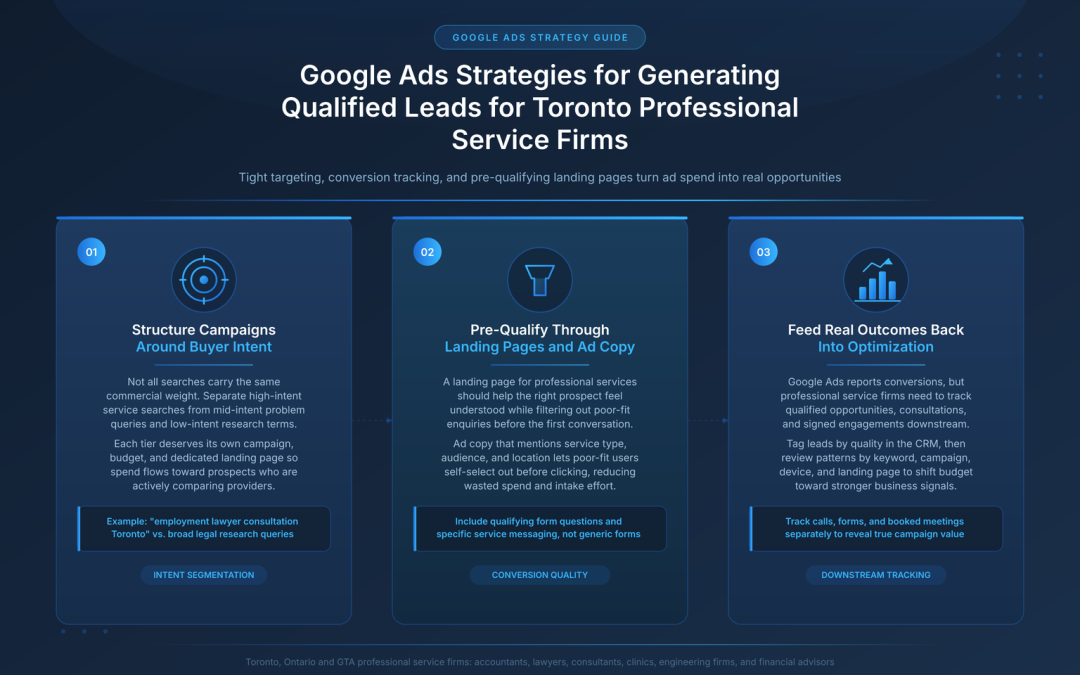

Optimizing Google Ads to Capture Qualified Photography Leads in Toronto
Photography is a competitive and nuanced profession, especially in a metropolitan market like Toronto. Prospective clients typically do more than a quick search before committing—they assess portfolios, read reviews, inquire about availability, and clarify specific needs before booking a session. Such a detailed decision-making process demands a tailored approach to Google Ads campaigns for photographers and studios.
Unlike immediate needs such as emergency services, photography clients require thoughtful qualification to ensure leads translate into bookings. This distinction means your ad campaigns must carefully filter users based on their intent and readiness. For those managing or marketing a photography business, specialized Google Ads Management involves strategic segmentation reflecting service types (weddings, portraits, commercial shoots), geographic focus, and client quality expectations.
Understanding how Google Ads can be adapted to photography businesses helps you invest marketing budgets wisely while attracting serious clients.
Key Google Ads Tactics for Capturing High-Quality Photography Clients in Toronto
To build effective campaigns, start by defining what a “qualified lead” means for your photography services. A lead might be qualified by factors like the event type, budget size, preferred session location, timeline, and prior experience with professional photographers.
With a clear definition, you can organize keywords by intent—separating those ready to book a session from those merely researching styles or pricing. Negative keywords help exclude irrelevant searches like “free photography tips” or “photography classes.” Creating dedicated landing pages that highlight particular services, such as “Toronto wedding photographer” or “corporate headshots in downtown Toronto,” further boosts lead relevance. Tracking interactions—including calls, contact form completions, and consultation bookings—allows you to distinguish real inquiries from casual interest.
It’s important not to treat every contact the same. For example, a detailed inquiry asking about availability on a wedding date should weigh more heavily than a quick question about pricing sent by someone outside your service area. For photographers seeking to refine their paid campaigns, seeing beyond mere conversion numbers to actual lead quality is crucial. Learn more insights from the original Google Ads strategies for generating qualified Toronto leads article.
Understanding Toronto’s Unique Market for Photography Services
Toronto’s diverse neighborhoods—from trendy Queen West to upscale Rosedale—present different client profiles and expectations. A downtown client might seek premium, quick-turnaround services, while a suburban family prefers relaxed sessions with local familiarity. Travel logistics, studio location, and virtual consultation options influence the likelihood a click on an ad converts into a genuine booking.
Photographers in Toronto also compete with large directories, social media influencers, and national studios. Your Google Ads campaign must therefore tailor ad copy and landing pages to emphasize unique selling points, such as specialization in cultural weddings or specific commercial niches. For instance, targeting “Toronto newborn photographer” should lead to a tailored page showcasing your expertise and packages for newborn shoots, not a generic gallery.
Local expertise like that offered by Zigma Internet Marketing’s SEO Services helps align your paid ads with strong organic visibility and relevant landing pages—critical for high-conversion photography campaigns.
Structuring Campaigns to Match Buyer Intent in Photography
Recognizing different buyer intent levels within your Google Ads strategy can optimize your ad spend and capture more qualified leads.
Intent Levels in Photography Search Campaigns
A) High-intent searches: These include specific photography service, location, and clear intention to book. Examples: “Toronto wedding photographer availability” or “corporate headshots studio downtown.” Such queries deserve distinct campaigns with customized ads and dedicated landing pages.
- How it works: Targeting search terms that indicate an immediate need with campaign structure tailored to service category and location.
- Best for: Photography studios ready to convert clients quickly with streamlined booking processes.
- Example: Separating “event photographer Toronto” from generic questions about photography pricing or styles.
B) Mid-intent problem searches: These indicate an interest in understanding a photography need without specifying booking intent. Example: “how to choose a family photographer Toronto.” Ads should lead to educational content that guides prospects toward inquiry.
- How it works: Target problem-related queries with landing pages explaining services and booking prerequisites.
- Best for: Photographers who want to nurture leads along the decision journey without increasing low-value inquiries.
- Example: Pages that explain session preparation tips and showcase portfolio highlights.
C) Low-intent research searches: Queries like “best camera for portrait photography” indicate informational intent rather than lead generation. These are better suited for SEO or remarketing rather than primary Google Ads campaigns.
- How it works: Exclude or limit budget for broad research terms to maximize paid search ROI.
- Best for: Content marketing efforts aiming to build brand awareness.
- Example: Redirect research traffic to blog posts rather than booking forms.
Creating Landing Pages That Qualify Photography Prospects Efficiently
Your landing page serves as the first interaction point to not just capture contact info but to communicate your unique photography style and set expectations. Strong pages feature clear service descriptions, showcase relevant portfolio samples, detail the types of clients or events served, describe geographic reach, and include intake questions that filter for type of session and readiness to book.
A well-designed landing page can significantly reduce wasted leads by encouraging only serious inquiries through smart form design and trust-building content such as testimonials, certifications, and clear pricing tiers.
This connection between landing page effectiveness and campaign success is why Website Design & Development expertise is a vital complement to Google Ads efforts. Improving your website’s conversion rate can turn traffic into loyal clients more reliably.
Five Proven Google Ads Strategies to Enhance Photography Lead Quality
1. Segment Campaigns by Photography Service and Booking Urgency
Different photography services attract different client behaviors. Separate campaigns for weddings, portraits, corporate events, or product photography allow targeting of keywords, budgets, and landing pages tailored to each niche.
Qualification signal: Monitor which service categories lead to confirmed bookings and focus spend accordingly.
Operational impact: Budget allocation aligns with high-value photography services, improving ROI.
Example: Run distinct campaigns for “Toronto wedding photographer” and “headshot photographer,” optimizing each for target responsiveness.
2. Build Negative Keyword Lists Based on Actual Inquiry Data
Exclude irrelevant searches such as “photography job openings,” “free photography classes,” or “DIY photoshoot ideas” that drain your budget without producing leads.
Qualification signal: Regularly analyze search terms connected to low-quality contacts and update negative keyword lists accordingly.
Operational impact: Reduced non-relevant impressions improve ad spend efficiency.
Example: A studio excludes “photography internship” or “camera equipment reviews” to avoid unrelated search traffic.
3. Track Both Calls and Form Submissions for Full Lead Visibility
Some clients prefer calling for immediate questions, while others fill out online forms. Tracking both channels gives a comprehensive view of campaign performance.
Qualification signal: Measure call length, missed calls, form completeness, and booked appointments separately.
Operational impact: Understanding lead behaviors allows optimization of communication and follow-ups.
Example: Evening desktop form submissions differ from daytime mobile calls, indicating when and how clients engage.
4. Align Ad Copy with Client Priorities and Qualification Criteria
Effective ads communicate clear benefits and criteria, such as “Toronto newborn photographer specializing in home sessions” or “Studio headshots for professionals in downtown Toronto.” This helps potential clients self-select before clicking.
Qualification signal: Monitor ad performance by comparing click rates against lead quality metrics.
Operational impact: Better filtering reduces wasteful clicks and eases lead management.
Example: Emphasizing “available weekends only” in ads to attract clients ready to book promptly for weekend sessions.
5. Incorporate Lead Quality Feedback into Ongoing Campaign Optimization
Not all leads are equally valuable. Integrate CRM data or booking follow-up outcomes into campaign analysis to prioritize keywords and ads that generate consultations and bookings, rather than form fills alone.
Qualification signal: Label leads by stage and conversion potential, then analyze trends across campaigns.
Operational impact: Spending shifts toward messages and keywords driving genuine business growth.
Example: Favoring campaigns that yield higher session bookings over those with many unanswered inquiries.
Choosing an Agency Experienced in Photography Google Ads
When hiring a marketing partner for Google Ads, look for agencies familiar with the unique sales cycles, client qualification needs, and branding sensitivities in photography.
Inquire about their approach to campaign structure, negative keyword management, multi-channel tracking, landing page optimization, and transparent reporting that connects ad spend to actual bookings.
Zigma Internet Marketing’s holistic approach integrates PPC, SEO, web development, and analytics to support photography businesses in Toronto and beyond, ensuring your paid search efforts convert into meaningful client relationships.
Questions to Ask Potential Agencies
- Do they track call and form leads plus quality metrics?
- How do they handle irrelevant traffic through keyword management?
- Can they enhance landing pages to increase conversion rates?
- Do their reports connect spending to booked sessions, not just clicks?
- Do they coordinate paid ads with SEO and local listings?
Maximizing ROI for Your Photography Google Ads Campaigns
Great ROI depends on more than ad spend. A campaign can drive visitors, but without a clear message, fast follow-up, and a smooth booking process, leads may fall through.
Toronto’s varied neighborhoods and client expectations require tailoring campaigns to fit each area and service niche, rather than a one-size-fits-all approach.
ROI conversations should factor in lead value, booking conversion rates, capacity to service clients, and responsiveness. A higher cost per booked session might still deliver more value if those clients fit your ideal profile better.
Key Factors Influencing Campaign Success
- Clear lead qualification: Define leads by event type, location, budget, and readiness.
- Landing page clarity: Clearly state who the service is for and what to expect after contact.
- Speed of follow-up: Prompt responses capture high-intent clients before they look elsewhere.
- Search term control: Tight keyword management avoids paying for poor-fit traffic.
- Accurate analytics: Use GA4, Google Tag Manager, call tracking, and dashboards for complete insight.
Combining SEO and PPC to Elevate Your Photography Business
While PPC quickly puts your photography services in front of motivated clients, SEO builds lasting organic visibility that nurtures trust. Together, they form a balanced digital marketing strategy in Toronto.
PPC is ideal for launching new services, seasonal promotions, or competitive markets. SEO supports this with strong website architecture, local content, and credibility through reviews and educational blog posts.
Professional SEO services can strengthen landing pages and enhance trust signals, because many clients research photographers online before reaching out.
How SEO Complements Paid Search
- PPC tests market demand: Quickly identifies high-converting services and keywords.
- SEO builds trust: Organic content validates your expertise after ad exposure.
- Local SEO boosts conversion: Google Business Profile and local listings reinforce reputation.
- Content marketing reduces wasted clicks: Provides answers for research intent outside paid ads.
How Toronto Photographers Can Win Online Without Overspending
You don’t have to outbid every competitor to attract quality photography clients. Focus on sharper messaging, precise targeting, better tracking, and clear definitions of worthwhile leads.
Narrow your campaigns to specific services, neighborhood focuses, and client types to maximize relevance and efficiency. For example, a boutique portrait studio in midtown Toronto might focus on professional headshots rather than general family photography, distinguishing itself against larger competitors.
These principles align with broader online marketing BEST practices, ensuring your budget supports high-quality inquiries rather than broad visibility alone.
Actionable Tips to Avoid Waste
- Limit campaign scope: Invest in service areas that match your skills and booking capacity.
- Use geographic targeting smartly: Craft messaging relevant to Toronto’s neighborhoods and the wider GTA.
- Improve user journey: Enhance website flows so visitors quickly understand your offerings and easily submit qualified inquiries.
- Regular quality checks: Review search terms, calls, and forms weekly at the campaign start to minimize wasted spend.
FAQs: Google Ads for Photography Lead Generation in Toronto
Collect sufficient data over weeks to identify patterns in Keyword intent, inquiry quality, and conversion readiness before making strategic changes.
Search campaigns targeting specific services and locations often deliver the clearest early results. Other campaign types like Display or Performance Max support later funnel stages.
Evaluate client inquiries via intake notes, booking rates, session completion, and location fit. Low cost per click does not always mean quality inquiries.
Service-specific landing pages tailored to the query and geography outperform homepages by better matching visitor intent and filtering out unsuitable leads.
Yes — SEO supports long-term visibility and trust, while PPC captures immediate high-intent demand. Tracking and reporting should distinguish between channels for clarity.
Respecting Your Studio’s Booking Team Through Smart Campaign Design
Your Google Ads campaign should simplify, not complicate, your booking workflow. For Toronto photographers, this means fewer low-quality inquiries, clearer qualifications, better tracking, and reports showing truly engaged prospective clients.
Zigma Internet Marketing, a Google Partner-certified agency in the Toronto area, specializes in aligning PPC, SEO, web design, and analytics to elevate photography business growth. For a thoughtful review of your campaigns and lead quality, reach out for expert guidance.
Plan Google Ads Around Qualified Photography Leads
Contact Zigma Internet Marketing to discuss paid search strategies, landing pages, and conversion optimization tailored for photography businesses in Toronto and the GTA.

Recent Comments