
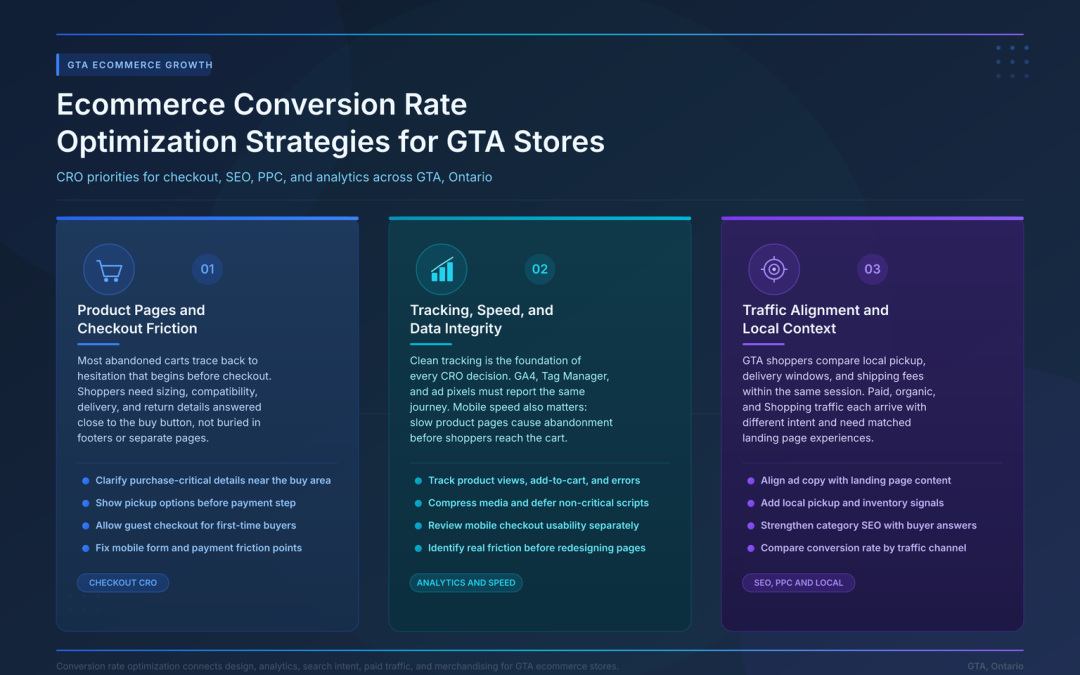
Boosting your photography e-commerce store’s conversion rate means turning more browsers into buyers without simply spending more on ads. For GTA-based photography retailers, conversion rate optimization (CRO) involves crafting product pages, search filters, checkout flows, and trust signals specifically tailored to the needs of passionate photographers and hobbyists in the region.
When managing an online shop selling cameras, lenses, or photography accessories—whether built on Shopify, WooCommerce, or a custom platform—the challenge extends beyond attracting visitors. The key question becomes: “At which points are photography enthusiasts hesitating or abandoning their carts, and how can we streamline their journey?” This pragmatic perspective transforms CRO from a mere design tweak into a strategic revenue driver for GTA stores. For a deeper dive into these strategies, check out the original insights at Zigma’s CRO guide for GTA stores.

Why Photography E-commerce CRO in the GTA Requires a Special Approach
Photography enthusiasts across GTA cities like Toronto, Markham, and Mississauga have distinct concerns when shopping online—they might compare choices based on delivery speed for timely shoots, local store pickup for quick access to gear, or detailed product specs that verify compatibility with their cameras. Unlike generic e-commerce habits, photography buyers demand precise information about lens mounts, sensor compatibility, image stabilization, and return policies that ensure peace of mind when investing in costly equipment.
For example, a Toronto-based camera shop might experience lower sales if product pages don’t clearly communicate lens compatibility; a Mississauga studio gear retailer might lose customers because local pickup options aren’t obvious. Effective CRO in this niche closely integrates analytics, search intent, and merchandising—all beyond a simple visual redesign. Agencies like Zigma Internet Marketing work with SEO services and paid ads simultaneously to ensure the photography e-commerce experience aligns with how local enthusiasts search, compare, and purchase.
Understanding Local Shopper Behavior in Photography Retail
Photography buyers in the GTA often juggle multiple local options, assessing factors like same-day pickup availability in Vaughan or delivery windows in downtown Toronto that fit their shooting schedules. Seasonal trends—whether peak wedding seasons or holiday gift shopping—also shape purchase urgency differently across the region, along with device preferences as many photographers browse extensively on mobile between shoots.
Moreover, catering to a multilingual audience and making product filters intuitive for both amateur and professional photographers can significantly reduce friction. Campaigns leveraging Google Ads Management and Google Shopping often send visitors with varying expectations, so it’s vital that landing pages reflect the specific gear, bundles, or services promised in the ads to convert traffic efficiently.
Common Conversion Challenges on Photography E-commerce Sites
Many photography e-retailers notice cart abandonment but fail to trace hesitation back to product-page level issues. Drivers of friction often include unclear details about lens compatibility, absence of high-resolution product images, or complicated return policies that leave photographers uncertain before finalizing a purchase.
Key engagement signals to monitor
- Product page interaction: Track how shoppers explore images, zoom features, select variants like focal length or aperture, and use size or compatibility guides.
- Search and filter usage: Monitor whether users efficiently find gear via filters for brand, sensor type, or accessory type, as poor navigation hurts sales despite solid traffic.
- Checkout behavior: Analyze where shoppers pause or exit—whether during shipping option selection, payment method choice, or promo code application.
- Source-based performance: Assess differences in conversion rates between visitors from organic search, paid photography ads, email campaigns, or social media referrals.
Effective CRO Tactics Tailored for Photography E-tailers
Enhancements on product pages
A) Address critical buying questions immediately: Comprehensive product pages should clarify compatibility (mount type, sensor size), warranty, shipping times, return conditions, and stock availability close to the “Add to Cart” button to reassure photographers before proceeding.
- How it works: Integrate compatibility charts, tech specs, and local pickup details directly on product pages.
- Best suited for: Stores with significant product views but low add-to-cart action on high-value items like camera bodies or prime lenses.
- Example: A GTA-based camera store includes sensor compatibility and lens mount guides next to variant options to ease selection.
B) Upgrade product imagery and videos: Visual confirmation of product features matters—lens details, mounting points, and behind-the-scenes usage shots help convert undecided buyers.
- How it works: Show multiple angles, zoom-in functionality, comparison clips, and lifestyle images.
- Best suited for: Shops where visitors view products but don’t interact with options or add to cart.
- Example: A Toronto-based photography gear retailer presents 360° lens views and sample shots taken with each lens.
C) Incorporate trust elements near purchase: Display verified reviews, warranty info, and customer support links close to purchase controls to build confidence.
- How it works: Place testimonials and shipping guarantees near “Add to Cart” instead of burying in footers.
- Best suited for: Stores with higher-priced or technical gear requiring reassurance.
- Example: A specialty camera shop in Mississauga highlights a 30-day return policy and live chat support near checkout.
Improving cart and checkout experience
A) Eliminate surprise fees: Hidden shipping charges or regional delivery constraints can cause last-minute cancellations.
- How it works: Communicate shipping costs, pickup options, and return rules upfront before payment steps.
- Best suited for: Stores with high cart adds but low checkout conversions.
- Example: A Markham store clearly displays free local pickup and regional shipping info before checkout.
B) Offer guest checkout: Mandatory accounts often dissuade passionate photographers seeking quick purchases for urgent shoots.
- How it works: Allow quick purchase without account creation, then invite sign-up post sale.
- Best suited for: Stores attracting first-time buyers from search or ads.
- Example: A GTA photography brand enables guest checkout and loyalty enrollment after payment.
C) Fix payment and form glitches: Mobile users especially face friction with poorly optimized forms, leading to abandoned transactions.
- How it works: Streamline mobile forms, enable wallet payments, validate addresses instantly, and handle payment errors gracefully.
- Best suited for: Stores with substantial mobile traffic or cross-device shoppers.
- Example: A Shopify-based camera shop in Toronto adds Apple Pay and simplifies address fields.
Aligning traffic sources with landing pages
A) Tailor paid ads to landing page content: Ensure that Google Ads and Shopping campaigns send users to pages directly reflecting ad promises and product availability.
- How it works: Sync product feed titles, ad copy, and landing pages.
- Best suited for: Photography retailers working with pay-per-click agencies in Toronto or investing in in-depth Google Ads management.
- Example: An ads campaign focused on mirrorless cameras links directly to filtered product pages showing current inventory.
B) Enhance organic landing pages with photography-focused content: SEO-driven visitors often seek detailed product knowledge and comparisons before buying.
- How it works: Add informative text, filters by photography parameters (e.g., sensor support), and technical schema markup.
- Best suited for: Stores exploring SEO services in Toronto or partnering with a local SEO company.
- Example: A winter sale page for camera bags includes waterproofing details, size charts, and customer reviews.
C) Use local SEO to support hybrid retail: For stores offering in-person pickup, studio tours, or rentals, highlight these local benefits clearly on product pages.
- How it works: Integrate Google Business profiles, local inventory notifications, and pickup availability.
- Best suited for: Photography retailers combining online sales with brick-and-mortar presence.
- Example: A camera rental shop in Markham displays showroom hours, localized pickup options, and trust badges.
Priority CRO Actions for Photography E-commerce Businesses in the GTA
Step 1: Ensure flawless tracking before experiments
Accurate data collection via GA4, Google Tag Manager, and ad pixels is crucial especially when optimizing photography gear sales with complex funnels. Without reliable tracking, CRO decisions lack a firm foundation.
Focus on: Product views, add-to-cart events, checkout initiation, completed purchases, total revenue, and source quality.
Typical oversight: Ignoring promo-code usage and checkout-related errors.
Example: A Shopify photography store notices mobile checkout drop-offs after realizing incomplete error tracking.
Step 2: Speed up mobile product pages for photographers on the go
Photographers often browse on mobile between assignments; slow-loading images or scripts can frustrate and push them away before they add expensive gear to the cart.
Focus on: Comparing mobile conversion rates for lightweight pages vs. media-heavy ones.
Typical issue: Apps for reviews or shipping notices bog down page load times.
Example: A fashion and photography store compresses images and defers non-essential scripts to boost mobile speed.
Step 3: Craft product pages that answer photographers’ buying questions
Product pages should instantly address technical questions about focal length, aperture, mounting, shipping, and return policies so shoppers feel confident.
Focus on: Add-to-cart rates, scroll depth, variant selection, and exit points on product pages.
Common gap: Product descriptions that sound polished but omit crucial tech specs or compatibility notes.
Example: A home studio lighting gear shop adds setup examples and care instructions just before review sections.
Step 4: Align SEO, PPC, and landing experience for photography buyers
Differing visitor intent from Google Shopping versus organic search requires tailored landing pages to meet expectations precisely.
Focus on: Conversion rates by channel, user engagement, bounce rates, and assisted conversions.
Issue often seen: One generic landing page for all visits, causing confusion or frustration.
Example: PPC visitors searching specific camera models get filtered product pages; SEO visitors land on rich category pages with educational content.
Step 5: Build checkout confidence for high-value photography gear
Checkout flows should reassure buyers with clear delivery timing, return options, payment flexibility, and customer support access before payment.
Focus on: Tracking checkout starts, exits during shipping selections, payment failures, and cart recovery rates.
Common misstep: Adding generic trust badges without clarifying shipping or return details.
Example: A GTA camera retailer highlights local pickup hours and support contacts upfront in checkout.
Selecting a Digital Partner for Photography E-commerce CRO
Your ideal partner will integrate CRO with SEO, paid ads, merchandising, and development. CRO is data-driven and involves more than just visual updates; it demands understanding how photographers shop, what information they need, and where they drop off.
Searching for digital marketing or SEO agencies in Toronto? Ask potential partners how they diagnose conversion friction, prioritize CRO experiments, and align recommendations with revenue growth, not just aesthetics. Zigma Internet Marketing, for instance, supports photography e-commerce with comprehensive analytics, landing page optimization, and paid media management to ensure a seamless shopper journey.
Before hiring, consider these questions:
- Tracking setup: Does the agency audit GA4, Tag Manager, and pixels thoroughly before suggesting changes?
- Development capability: Can they implement CRO solutions on Shopify, WordPress, or WooCommerce, or just advise?
- Channel-specific strategies: How do CRO approaches differ across SEO, PPC, email, and social traffic?
- Clear reporting: Do their reports connect improvements to actual orders, revenue, and acquisition efficiency?
Maximizing ROI in Photography E-commerce Campaigns
ROI depends heavily on factors beyond ad spend: product margins (e.g., high-end lenses vs. affordable accessories), average order values, return rates, fulfillment capabilities, and landing page relevance all shape scalable growth.
Marketing teams focused on photography gear must tailor campaigns accordingly. For example, lightweight items may benefit from bundles or free shipping thresholds, while premium equipment demands detailed content and customer education to minimize returns.
Integrating CRO with content marketing, SEO, and paid ads — whether for promoting DSLR cameras or photo editing software — ensures traffic lands on pages primed for conversion, avoiding wasted budget and shopper frustration.
Important ROI considerations
- Buyer intent: Visitors searching a specific camera model are closer to purchase than those exploring broad photography tips.
- Landing page relevance: Pages must match ad messaging and search intent to minimize bounce.
- Order value: Strategic upsells and free shipping deals increase revenue without pressuring buyers.
- Repeat business: Loyalty emails, replenishment reminders (e.g., camera batteries, memory cards), and post-purchase support drive long-term value.
SEO and PPC Synergy for Photography E-commerce
SEO and PPC campaigns provide complementary signals for conversion optimization. PPC offers rapid insights into customer intent, ad-message effectiveness, and landing page fit, while SEO reveals long-term category and product page performance.
Photography stores in the GTA shouldn’t treat SEO and PPC as separate silos. Effective CRO uses data from both to continuously refine messaging and user pathways—what works quickly in a paid campaign may inform SEO content strategy, while organic pages may become efficient paid landing spots.
Where each channel guides CRO
- SEO: Enhances category structure, internal linking, and technical schema to boost organic traffic quality.
- PPC: Tests and validates messaging, offer clarity, and landing page relevance for immediate results.
- Email: Identifies triggers for repeat purchase and cart recovery.
- Social media: Provides feedback on creative messaging, photography product objections, and audience segmentation.
How GTA Photography Retailers Can Win Online Without Overspending
Local photography e-tailers don’t have to dominate every search or outbid large national brands. Instead, they can focus on crafting pages that quickly answer photographers’ queries, highlight product availability, and streamline the purchasing path with low friction.
A Markham camera shop might win through convenient in-store pickup and trusted local expertise. A Toronto retailer could excel with fast delivery, rich product visuals, and optimized mobile checkout. Meanwhile, Mississauga stores benefit from clear service area messaging and localized inventory cues tailored to budding pros and hobbyists.
To maximize digital marketing efforts, photography retailers need well-aligned CRO, analytics, and web development supporting their traffic. This integrated approach is where Zigma’s Digital Marketing Services deliver measurable impact.
Conversion-focused moves visible to photography shoppers
- Transparent shipping and pickup info: Clearly state if and how equipment can be shipped or picked up before checkout to avoid surprises.
- Detailed, relevant product content: Product and category pages should answer technical questions, user needs, and availability.
- Fast, intuitive mobile experiences: Optimize page load, variant selection, and checkout steps for mobile-first visitors.
- Locally credible signals: Highlight store proximity, support channels, customer reviews, and in-person pickup options.
How Zigma Internet Marketing Supports Photography E-commerce Success
Based in Markham and serving the GTA, Zigma Internet Marketing specializes in helping photography retailers grow through SEO, PPC, Shopify and WordPress development, and conversion-focused content. Their holistic approach connects site performance with traffic sources to ensure changes deliver measurable revenue improvements.
Whether it’s updating a checkout process, refining product descriptions, optimizing Google Shopping feeds, or boosting category SEO, Zigma’s expertise spans all critical areas. Their certified Google Partner status and transparent reporting focus on meaningful metrics like sales, calls, and lead quality — not vanity measures.
Ready to enhance your photography store’s conversion rate?
Contact Zigma Internet Marketing to discuss tracking, landing page optimizations, SEO, PPC, and checkout improvements tailored to your photography e-commerce goals. Reach out at (647) 556-6071 or [email protected].
FAQs About CRO for Photography E-commerce in the GTA
Once there’s adequate traffic and sales data—especially following paid campaigns or seasonal demand spikes—a review helps spot shopper hesitation or drop-off points specific to camera gear purchases.
Focus on category pages (e.g., lenses, cameras), popular product pages, cart and checkout flows, and search/filter interfaces where customer decision-making is most intense.
CRO can clarify whether site experience or traffic mismatch drives underperformance. Fixing campaign targeting or product-feed accuracy may be necessary before seeing big CRO gains.
Yes, because theme defaults and common apps rarely solve issues like technical spec clarity, compatibility details, mobile experience, or local pickup messaging.
SEO attracts qualified organic visitors looking for specific gear or information; CRO clears their path from discovery to confident purchase, aligning content and user experience with search intent.
Related Topics:

Recent Comments